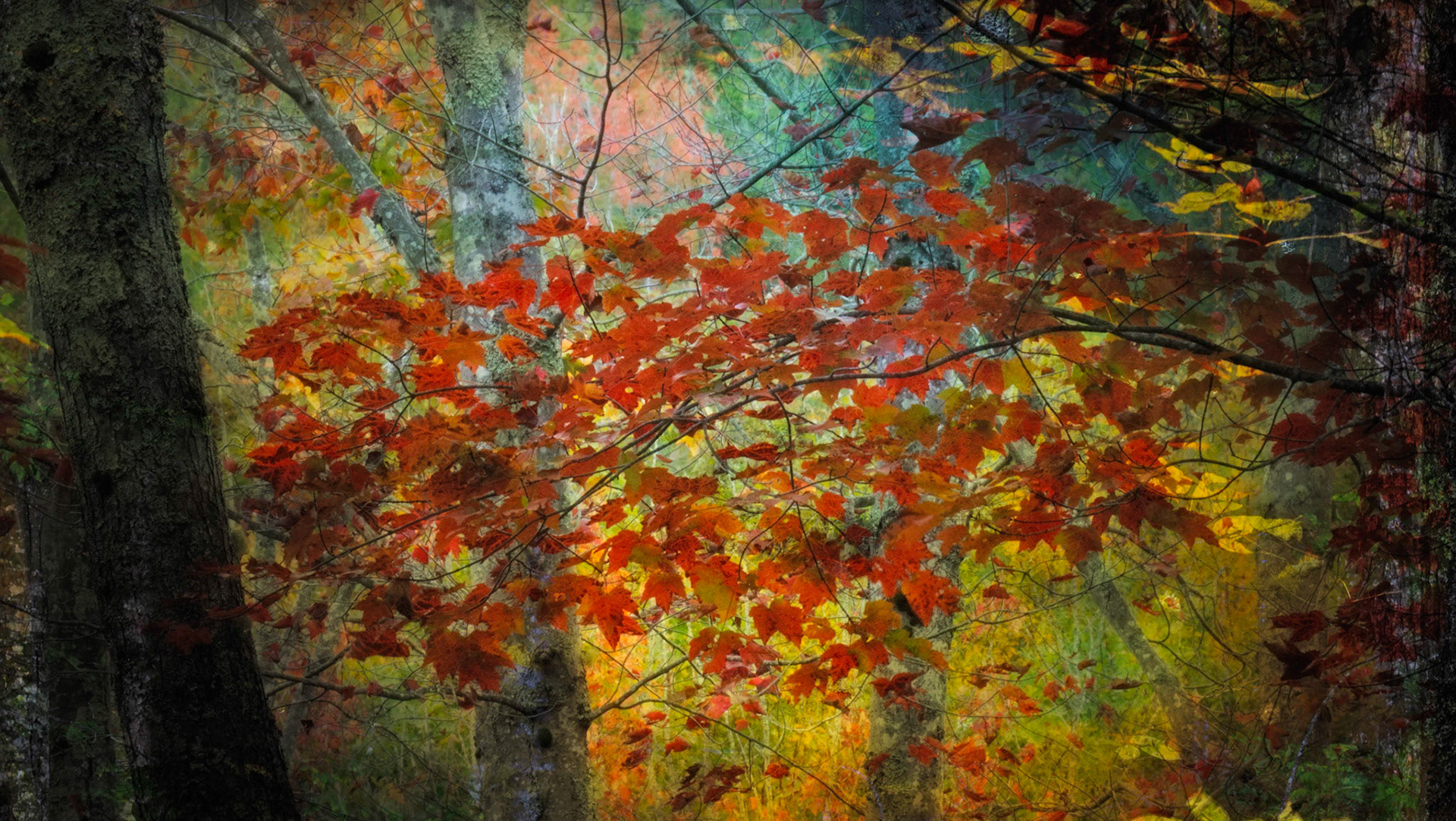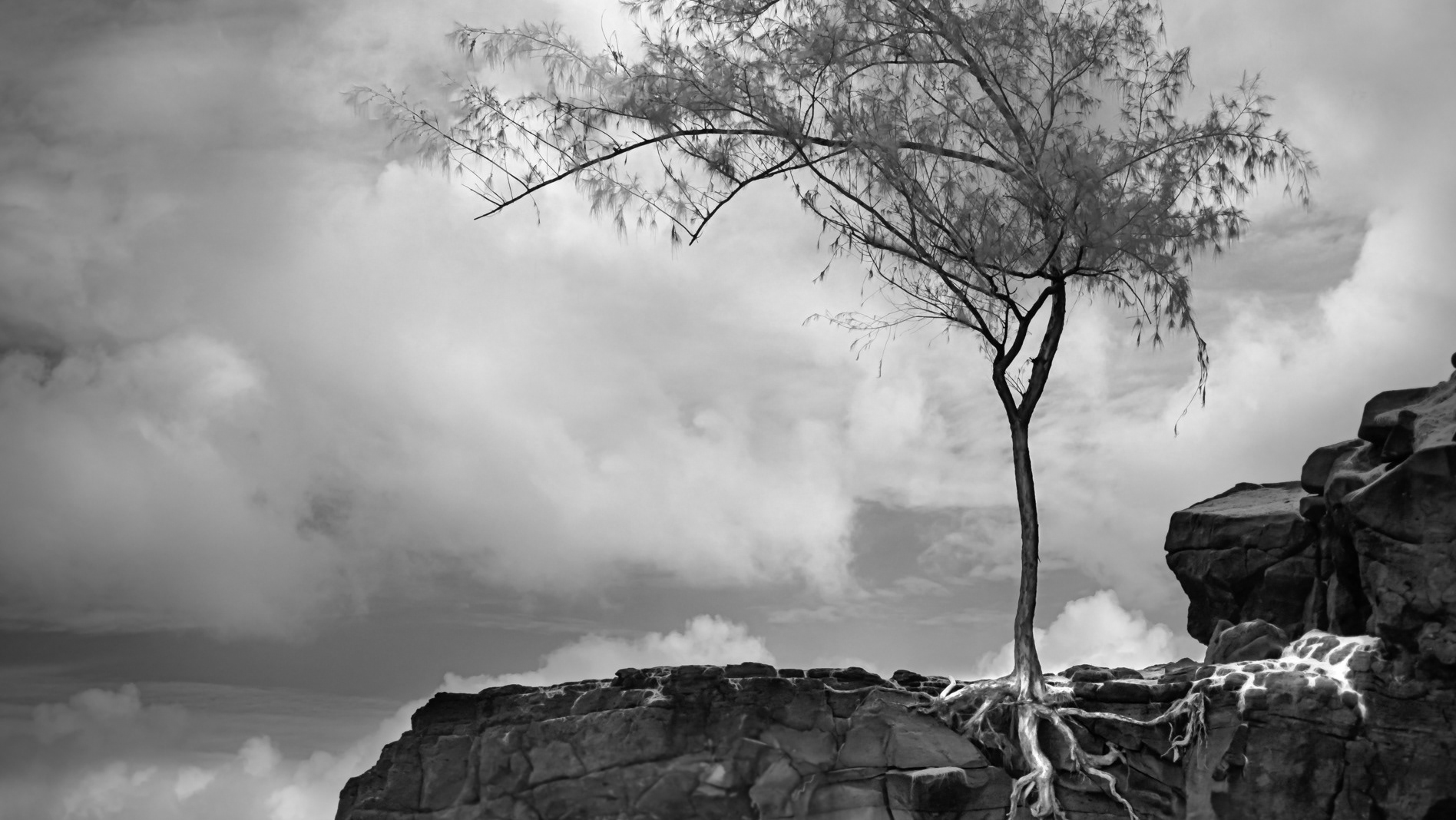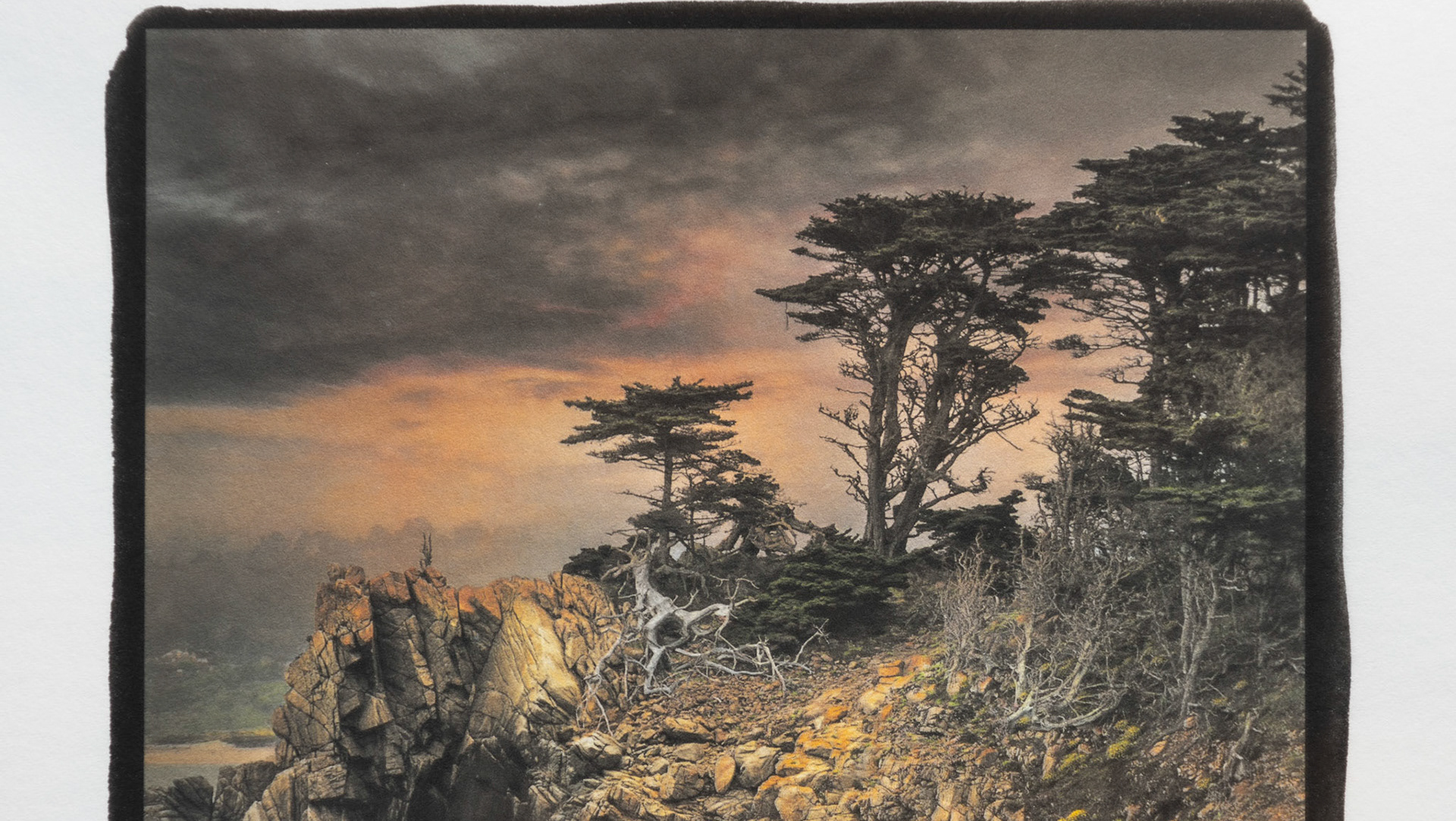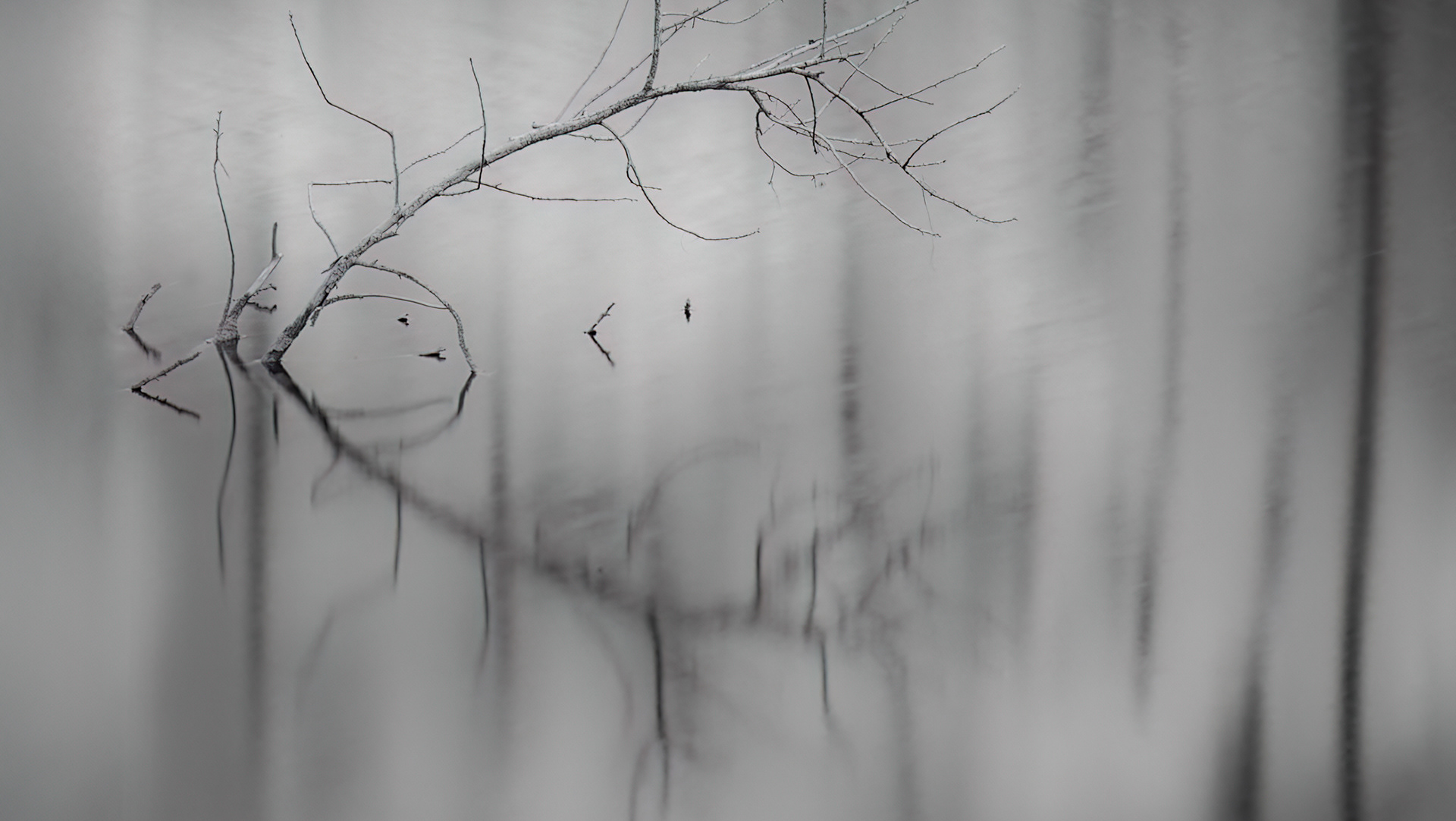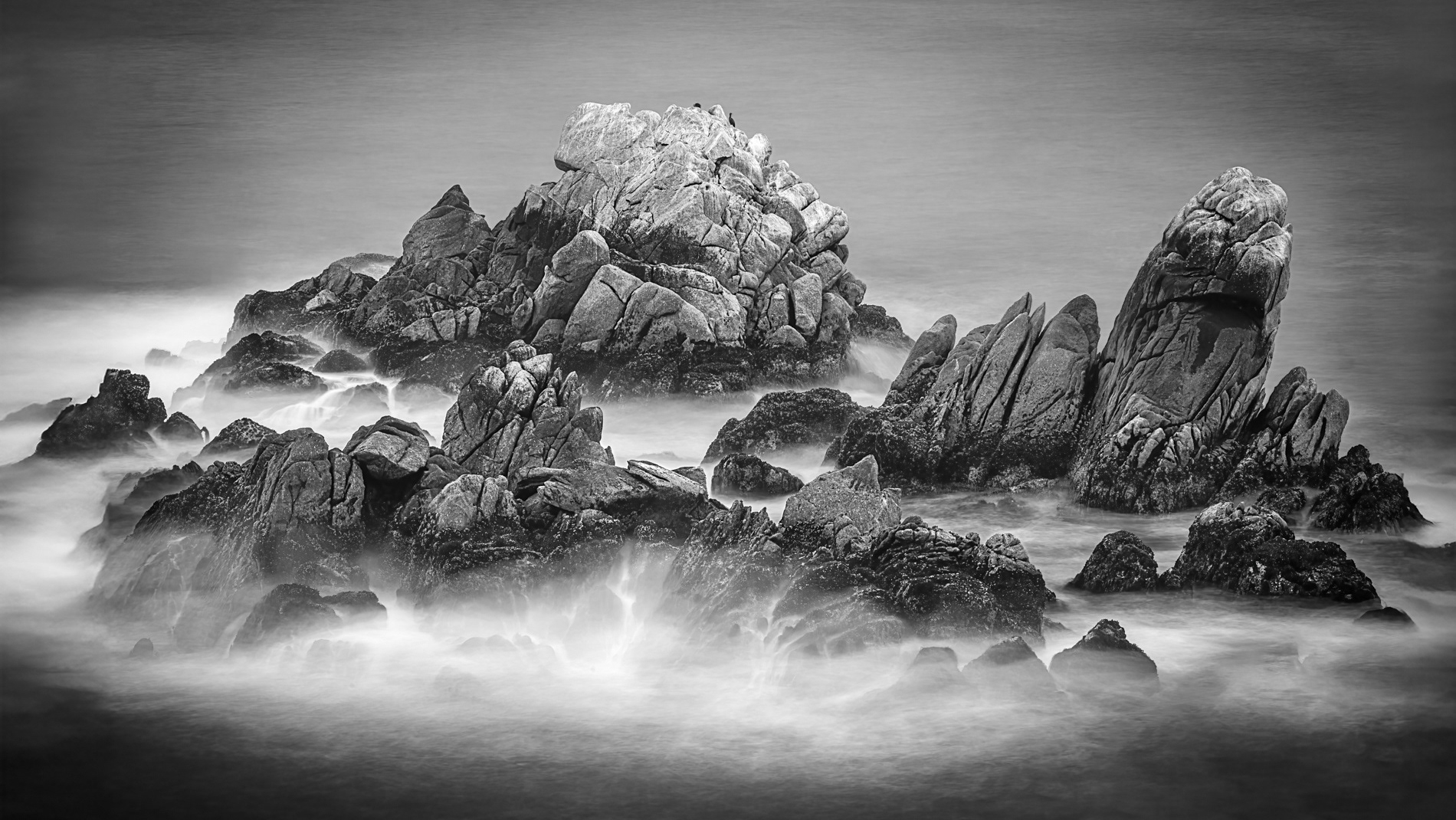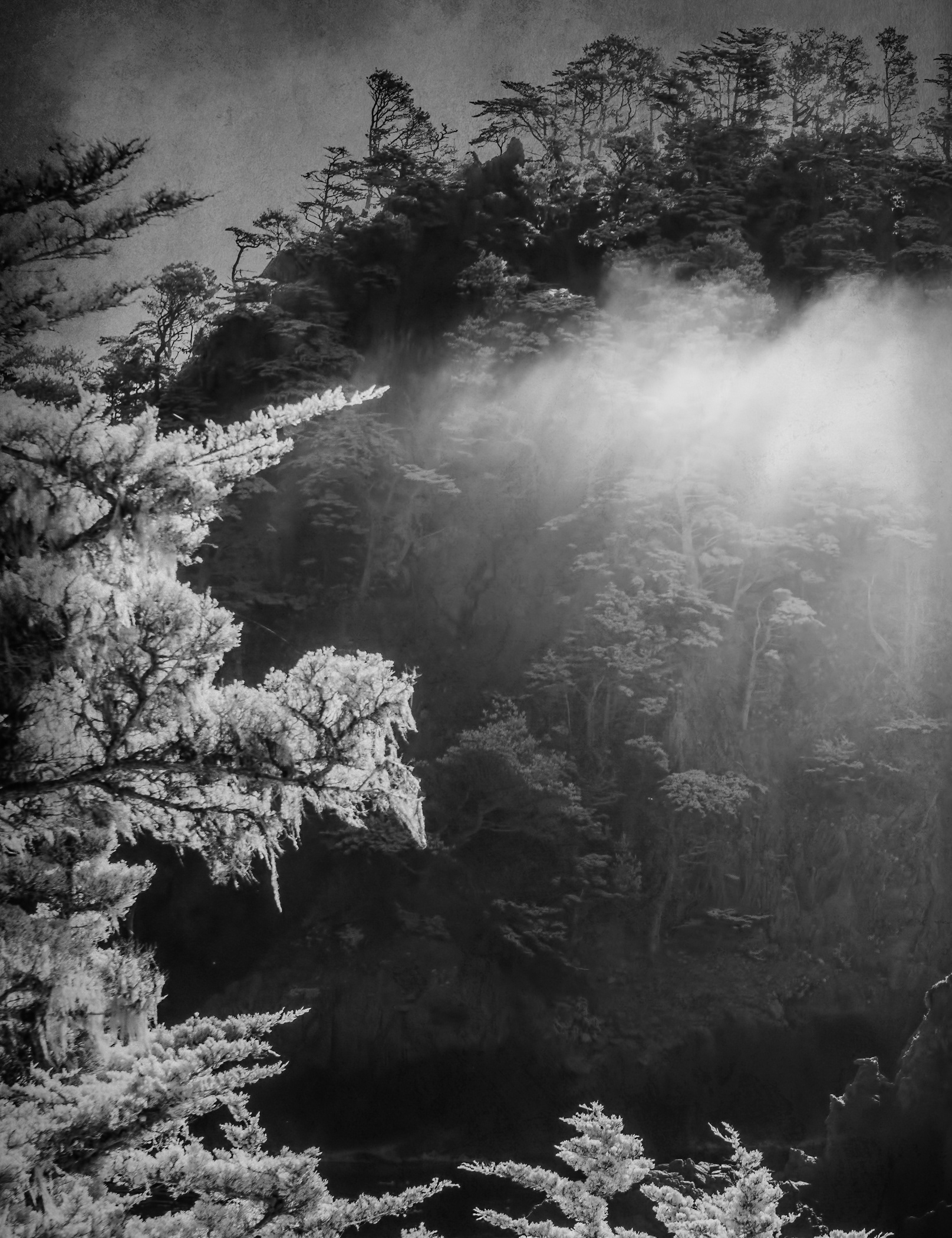


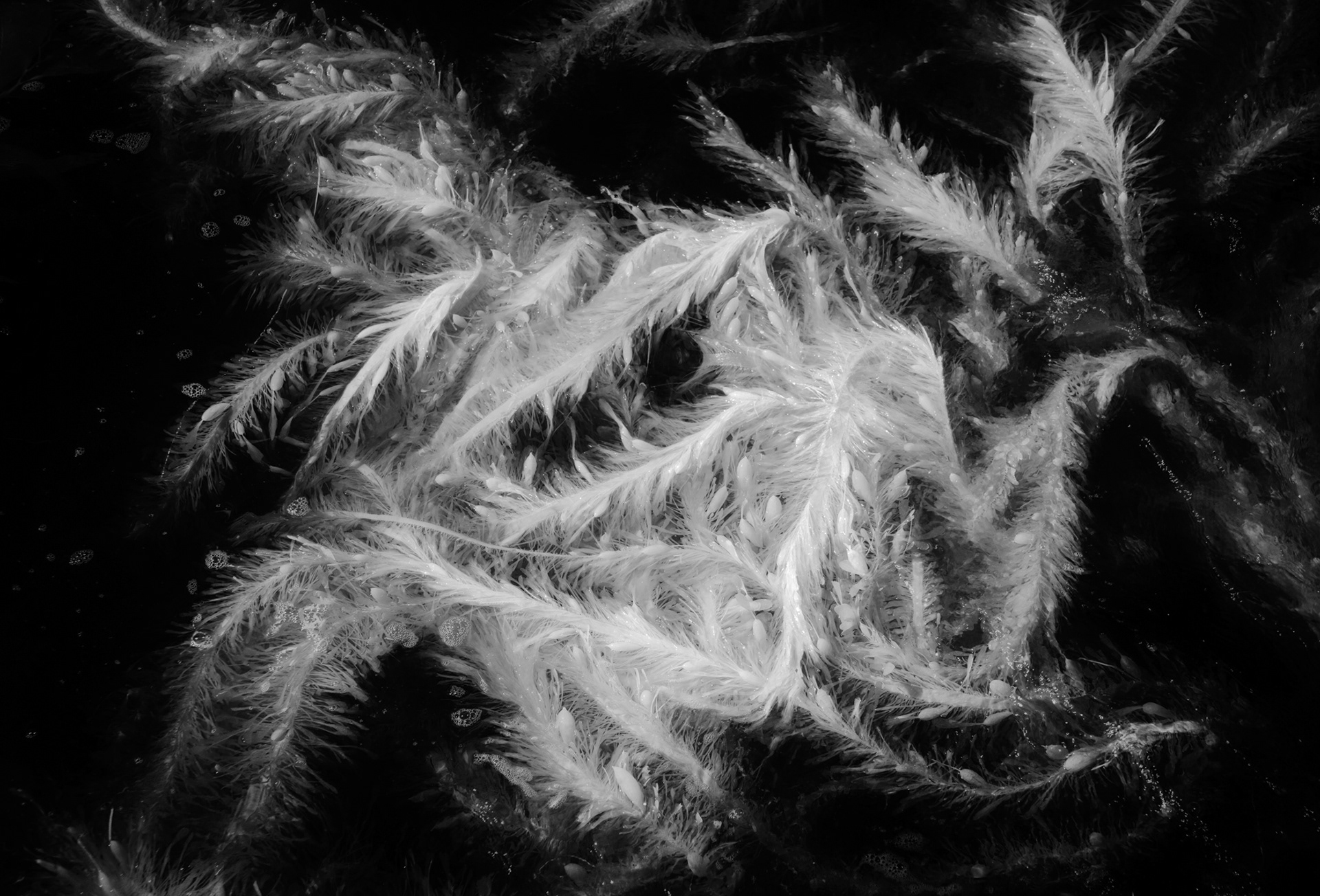

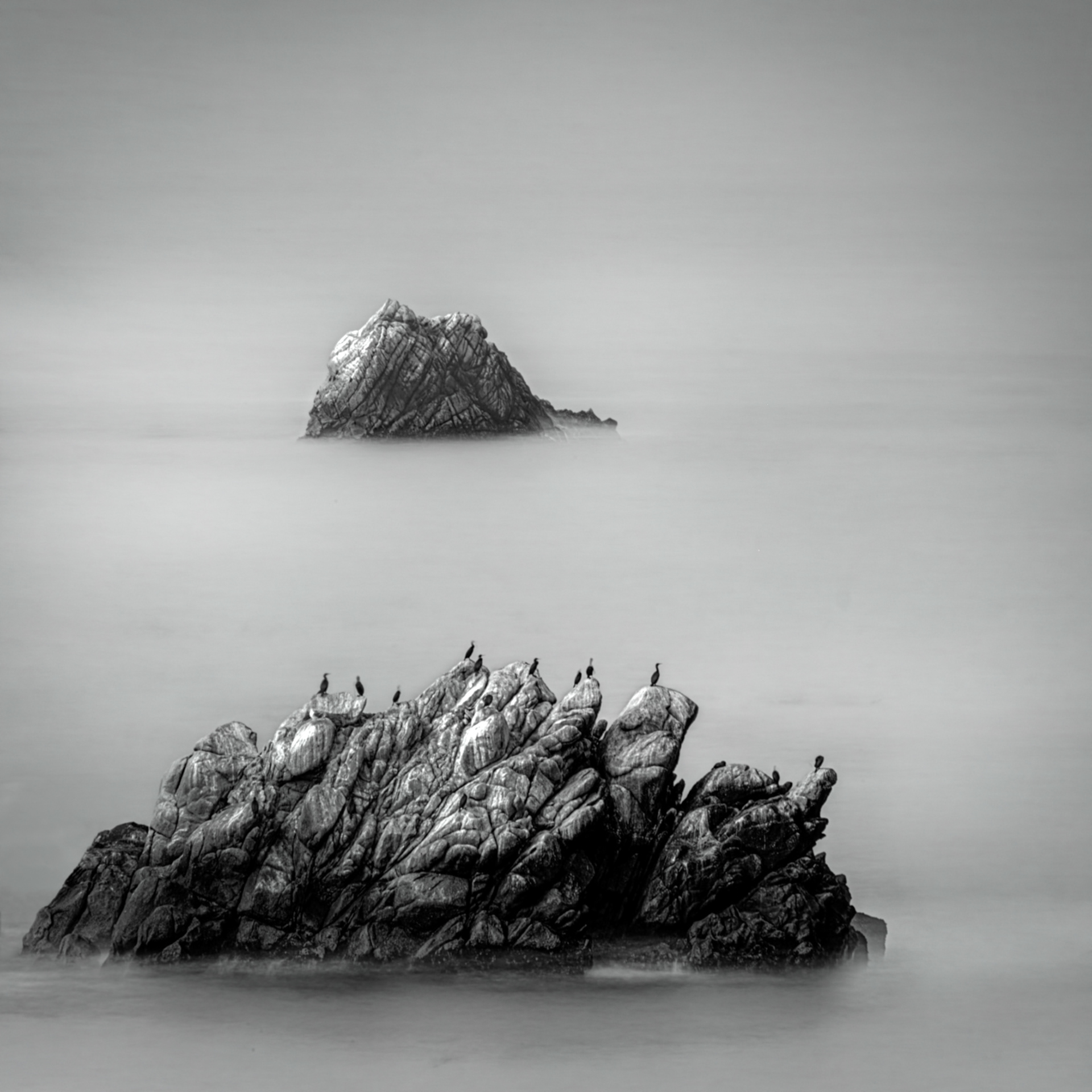


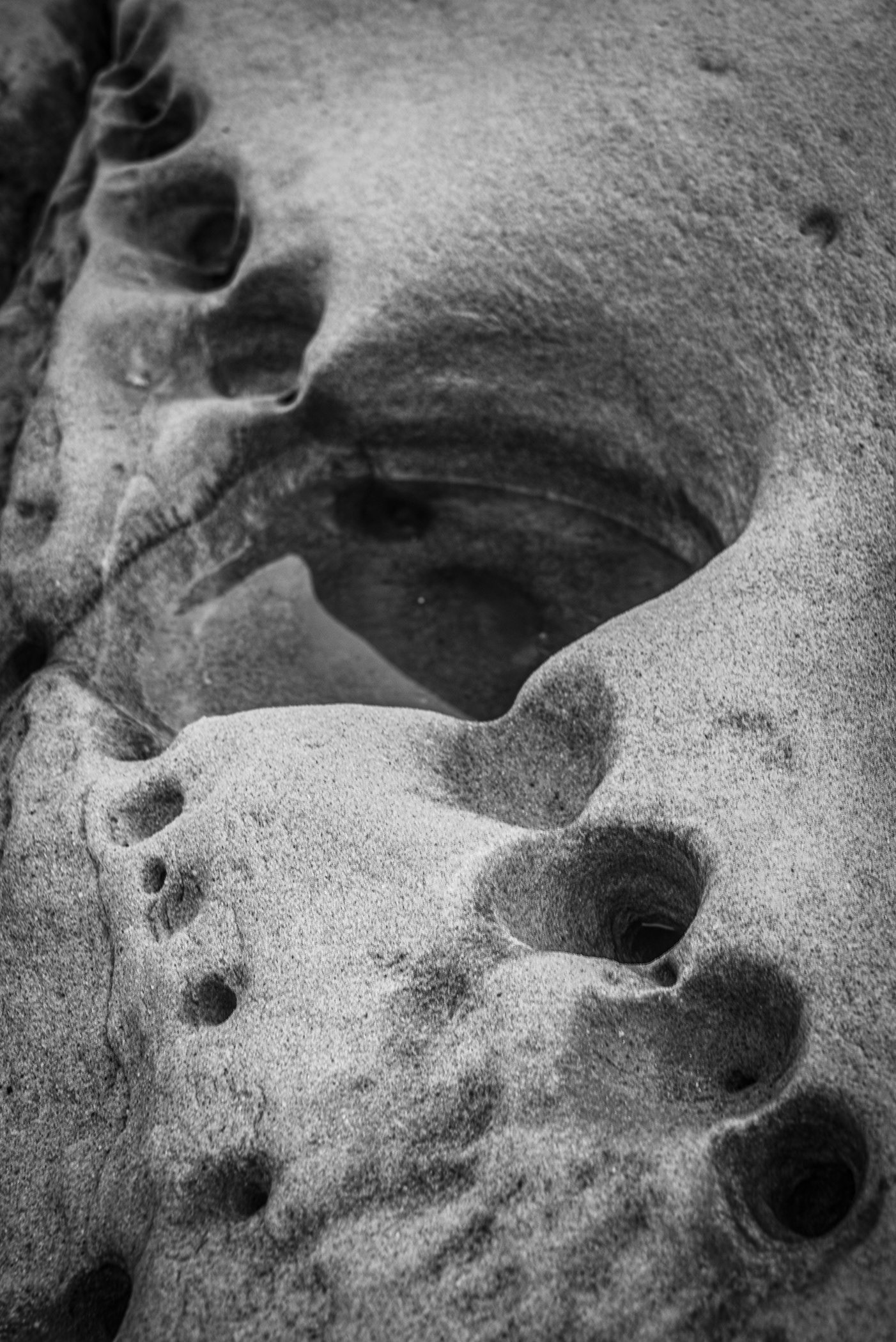
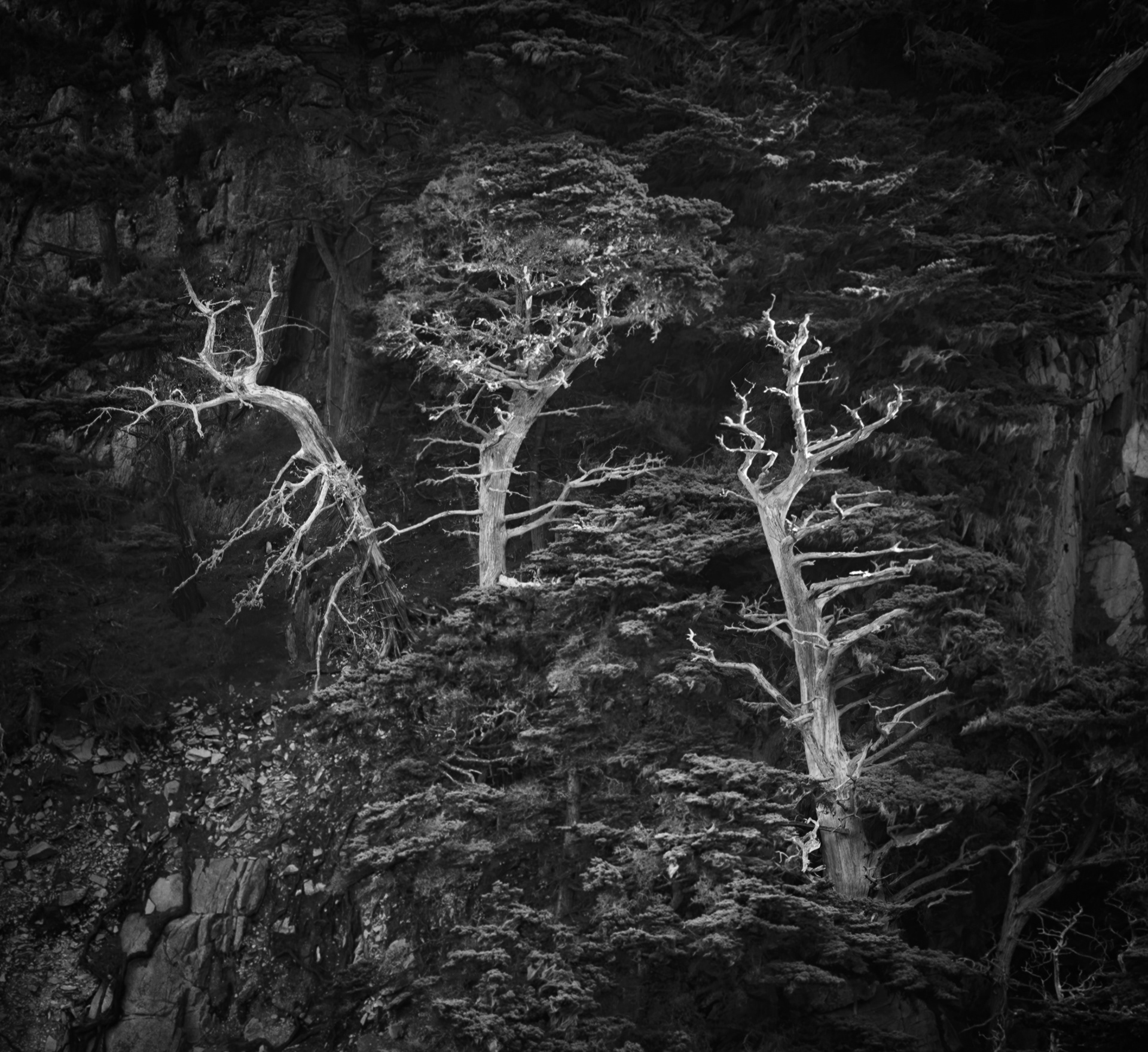


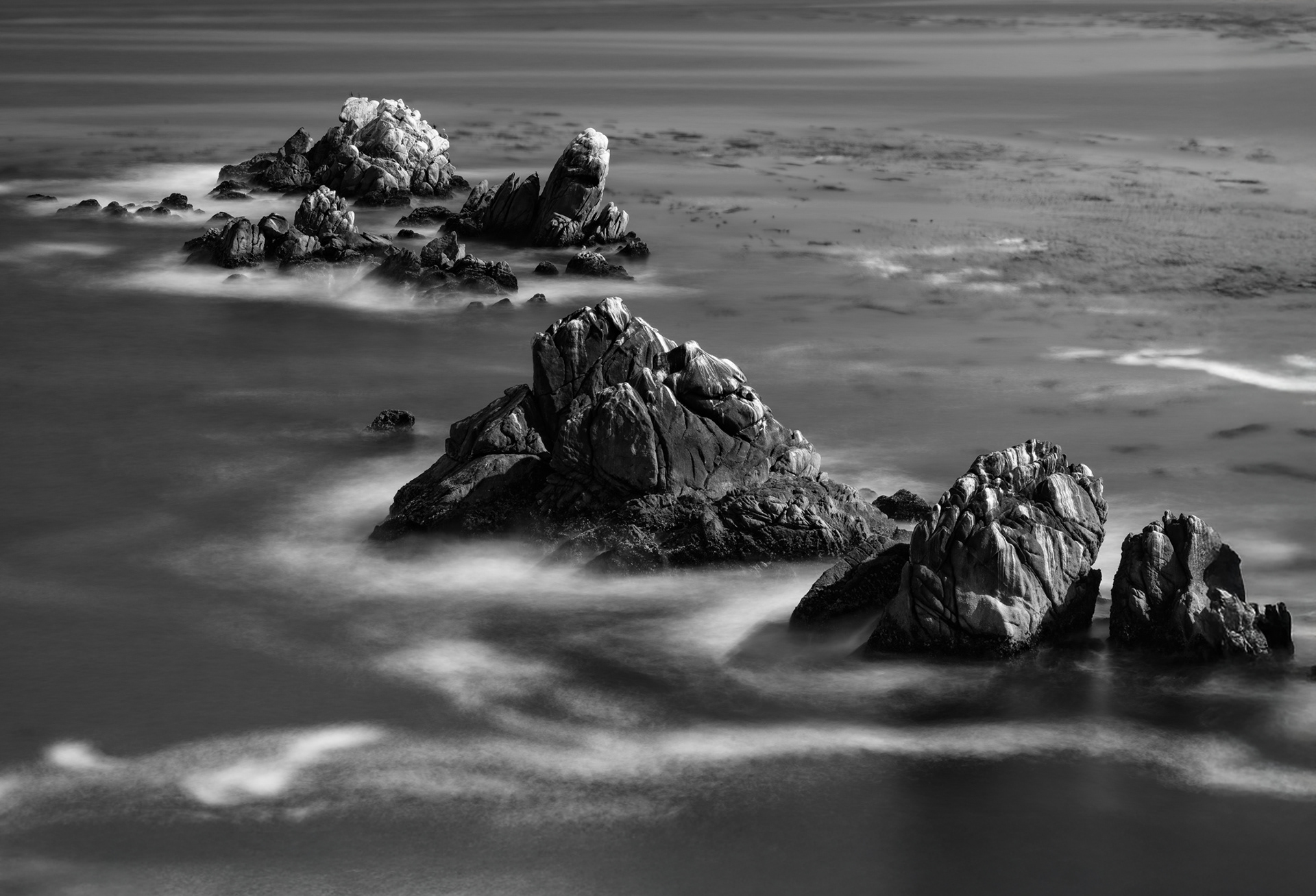
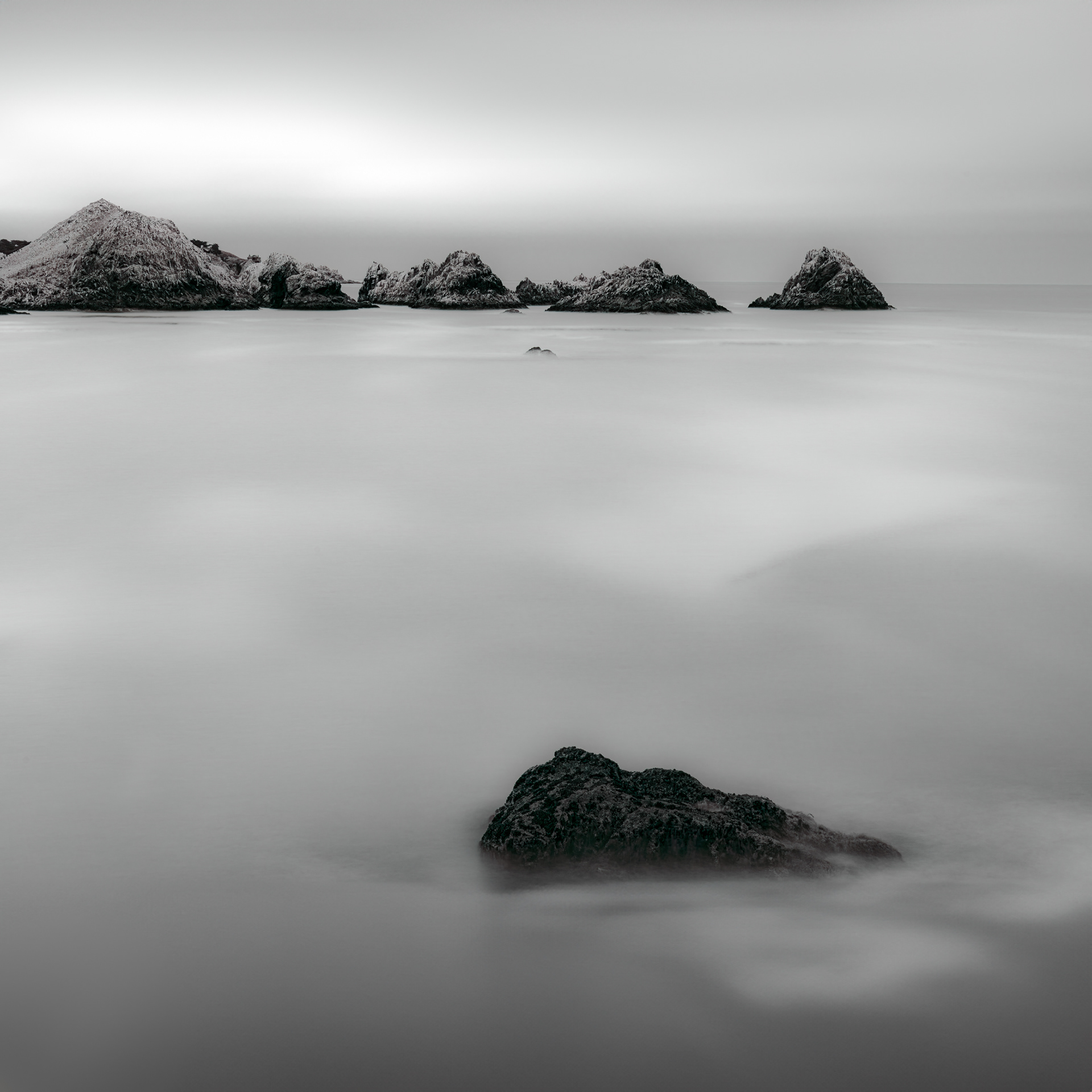


Point Lobos is often described as “pristine,” with its rocky coves and Monterey cypress groves appearing untouched by human presence. Yet the Whaler’s Cabin hints at a different past, one shaped by whaling, fishing, abalone harvesting, quarrying, and canneries, with train tracks and boat docks marring the landscape. By 1890, plans for a subdivision called “Point Lobos City” threatened to permanently alter the landscape. Engineer Alexander Allan began repurchasing the land in 1898 to protect its rare beauty. After his death, California acquired the first 348 acres in 1933 and removed the remaining industrial structures, allowing the ecosystem to recover. Today, the landscape of Point Lobos stands as a positive example of environmental stewardship, evident in what remains and in what is no longer visible: the scars of an industrial past. In a series of solitary walks, I committed to a slower, more mindful examination of this exquisite landscape. I wanted to look beyond the iconic vistas to the quieter cross-sections of the land, seeking overlooked beauty and a deeper appreciation for what time and restoration have erased. The images in this series are hand-printed using a vintage Platinum/Palladium process. Its history parallels that of the park, and the archival quality of the prints reflects the State’s commitment to the park's preservation.